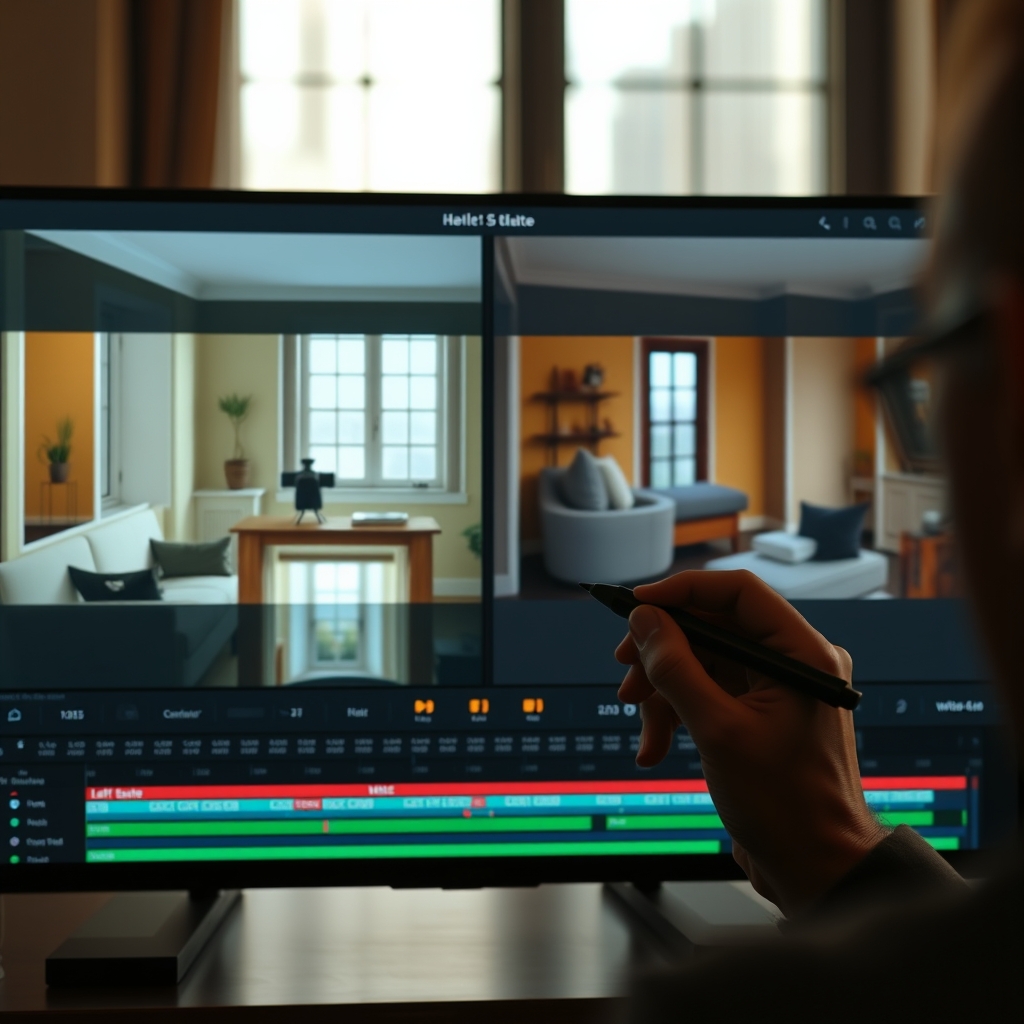
The Line Between Good and Great
Every real estate videographer knows the basics of a clean edit: clip trimming, color balance, music sync. But there's a vast difference between a video that simply showcases a home and one that makes a buyer feel like they're already walking through the front door. That emotional impact is what separates good from great real estate video editing.
For production teams balancing multiple listings, the gap often comes down to time, skill, and consistency. That's why many professionals turn to an outsourced video editing partner to maintain a high bar without burning out.
What "Good" Editing Gets Right
A good property tour is technically competent. It has smooth transitions, properly exposed shots, and a basic narrative flow from exterior to interior. It gets the job done, but it rarely stands out in a crowded feed.
- Stable, well-framed footage assembled in logical order
- Basic color correction that matches the camera's original look
- A generic music track dropped in at the right volume
- Text overlays for room labels and square footage
This level of video post-production is essential, but it's now the baseline. Buyers scrolling through listings see dozens of similar videos daily.
What Elevates an Edit to "Great"
Great real estate video editing transforms raw footage into a compelling story. It understands pacing, rhythm, and the psychology of a buyer's eye. Here's where the magic happens:
1. Intentional Pacing and Rhythm
A great editor doesn't just place clips end-to-end. They build tension in the entryway, linger on the kitchen island where families will gather, and speed up through hallways. The edit breathes with the home. Pacing is the invisible hand that guides emotion.
2. Color Grading That Sells a Lifestyle
Good editing corrects white balance. Great editing creates a mood—warm afternoon light for a cozy cottage, crisp cool tones for a modern loft. Subtle grading makes the same space feel aspirational rather than just accurate.
3. Sound Design Beyond Music
Music sets the tone, but great editors add ambient layers: the soft click of a door latch, the faint rustle of leaves outside, or the gentle echo of footsteps on hardwood. These details make a property tour feel immersive, not just informational.
4. Seamless Transitions That Don't Distract
Flashy whip pans and spinning transitions can cheapen a luxury listing. Great editing uses match cuts, speed ramps, and subtle cross-dissolves that keep the viewer oriented without calling attention to the technique.
Great editing isn't noticed. It's felt. When a buyer asks "When can I see it?", the editor has done their job.
Subtle Techniques That Make a Massive Difference
- Speed ramping – smoothly accelerating through less important spaces and decelerating at key selling points like the primary suite or backyard.
- Match cutting on movement – cutting from a panning camera to a walking POV creates continuity and flow.
- Sound bridging – letting audio from the next scene begin before the visual transition keeps momentum.
- Selective focus pulls – drawing attention to a fireplace, a view, or a custom fixture without a gimmick.
Why Outsourcing Can Close the Gap
Most real estate videographers are excellent shooters but stretched thin on post-production. Juggling multiple listings means edits get rushed, and quality slips from great back to good. An experienced video editing partner solves this by handling the detail work while you focus on building client relationships and scaling your production team.
When you work with a dedicated outsourced video editing service, you get consistent pacing, professional color grading, and sound design that matches your brand—without spending hours in the timeline. It's the fastest path from "good enough" to "wow."
Ready to scale your video business?
We edit real estate videos so you can focus on shooting.
Start a Project →